
Latest on Cardiac Care
Daily aspirin offers little to no benefit for most adults trying to prevent heart disease, new report says
After years of recommending regular aspirin to prevent heart attack and stroke, scientists now see little benefit for most healthy people, and say it may contribute to a risk of bleeding in your stomach or brain that goes up as you get older.
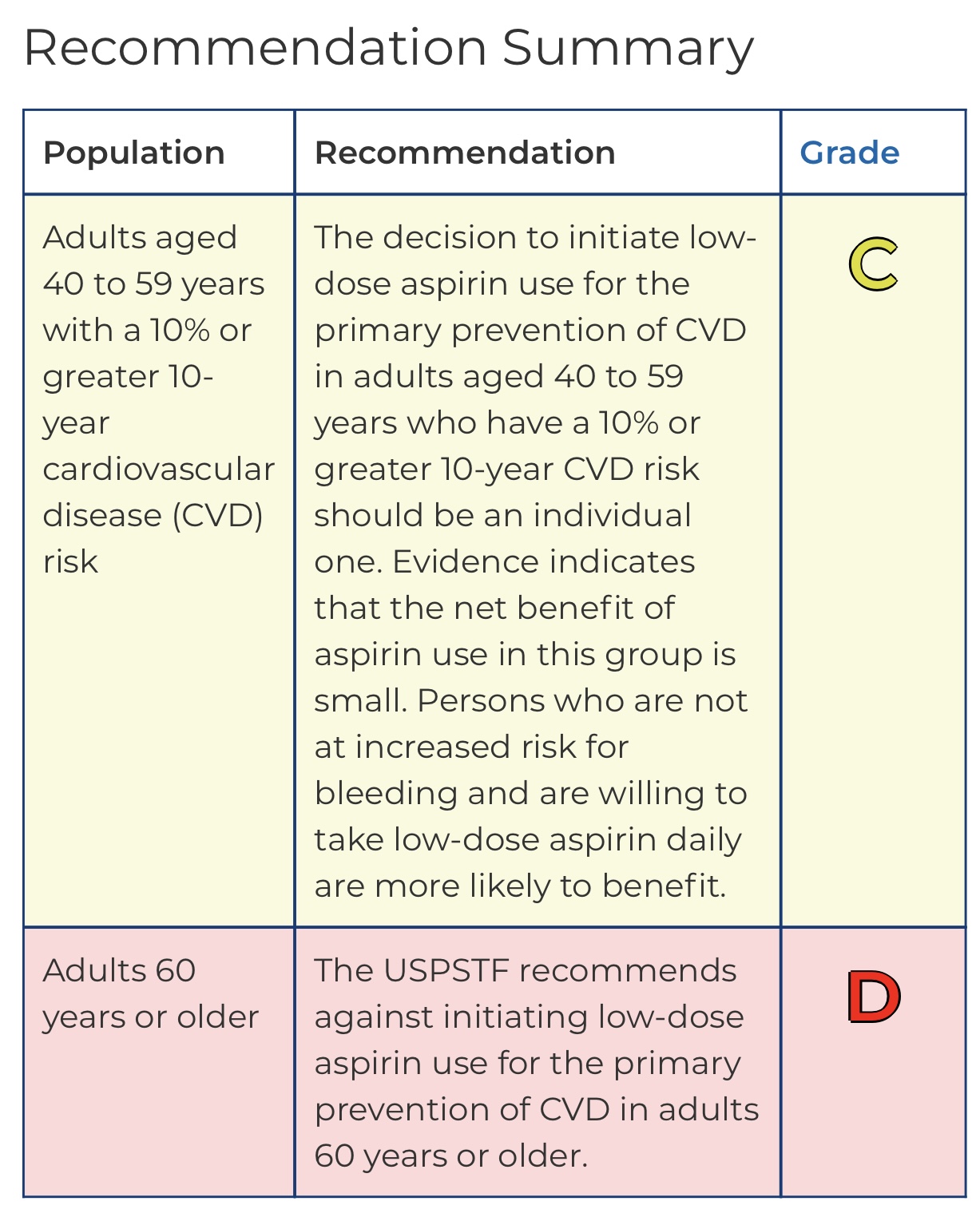
The US Preventive Service Task Force has finalized its latest recommendations on low-dose aspirin regimens and now says people over 60 should not start taking a daily aspirin for primary prevention of heart problems, in most cases.
If you are between 40 and 59 years old, the USPSTF leaves it up to you and your doctor to decide whether you should take a daily aspirin in specific circumstances.
According to the recommendations, published Tuesday in JAMA, your doctor might want to consider an aspirin regimen if you are in the 40-to-59 age range and you have a 10% or higher 10-year risk for cardiovascular disease.
This means your chance of having a heart attack or stroke in the next 10 years is higher than normal, based on a calculation that includes factors like age, sex, race, cholesterol levels, blood pressure, medication use, diabetic status and smoking status. According to the task force, a daily aspirin only “has a small net benefit,” for this group specifically.
Preview attachment aspirin-use-cvd-prevention-final-rec.pdf
Read PDF: Aspirin use in cardiovascular disease prevention